They say one of the hardest things to do in adventure racing
is to get 4 people to the start line of a race. This race would prove that
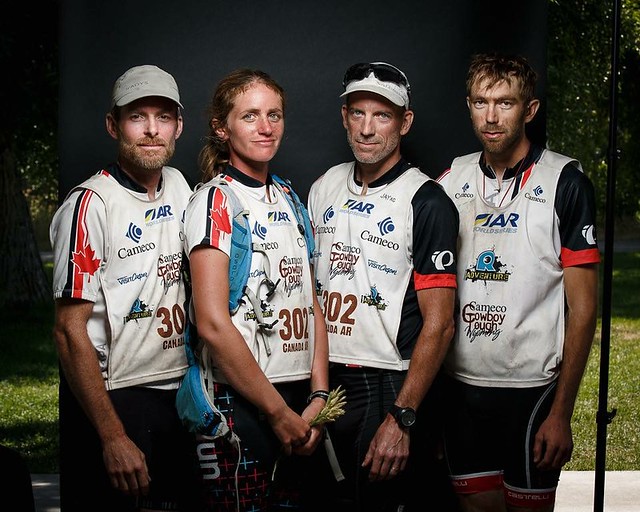
statement true. After months of searching, finally securing a 3rd
team mate, almost securing a 4th team mate, losing the 3rd
team mate, finding a replacement 3rd team mate (Chad Spence), and
sending out countless emails to almost all of the Canadian and international
racers we know (and many we don’t know personally), Nathalie and I (James)
found ourselves literally hours away from cancelling our trip to the Adventure
Racing World Championships two weeks before the race. But with a little luck,
we were finally able to secure a 4th team mate – Ben Brewer - a
newcomer to expedition racing, but an experienced navigator and strong racer at
shorter distances.
This was not only a new team configuration, each of us was
walking into the race with our own challenges and unknowns: Ben was racing his
first race beyond 36 hours, Chad was facing his longest expedition race to date
and the challenge of navigating at a World Championship, Nathalie was in the
best shape of her life and ready to challenge herself to be a leader in pushing
the team forward on the course, and I was dealing with a knee injury sustained
in a mountain bike crash 5 weeks before the race. So we knew going in that the
race ahead of us would really be a test for each of us as individuals, and as a
team.
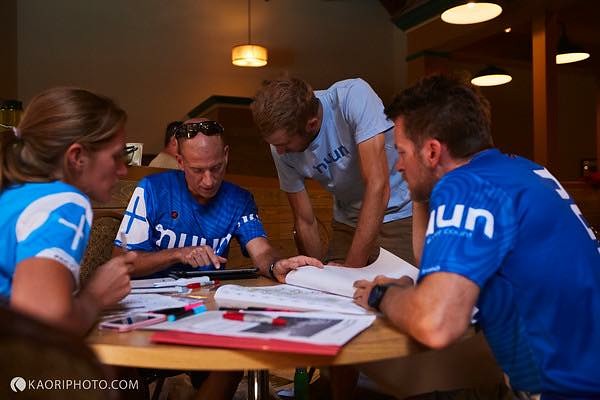
Our race preparations went relatively smoothly, despite the
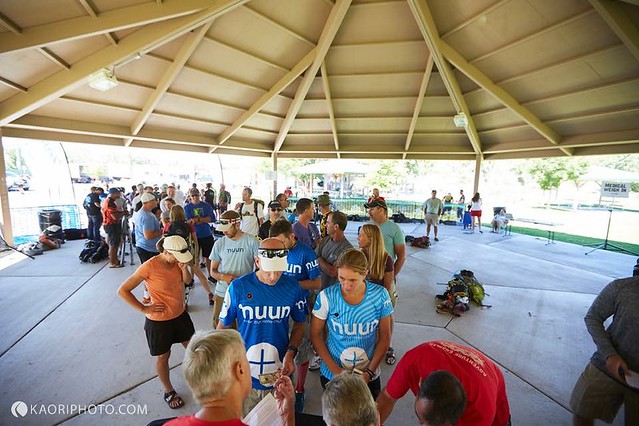
usual difficulties of gear bin logistics and the opening ceremony went well with lots of little fun challenges.


But we got everything organized relatively quickly and had the evening before the race start to relax, unwind, and get to know each other a little better. We got the maps as we stepped onto our busses at 5:30am on August 10th for a 5 hour bus ride to start of the race in Jackson Hole, WY. Once arrived, it wasn’t long until the race was underway.

We started with an orienteering course prologue on the side of
the ski hill, followed by a 12km run (Leg 1) on a paved trail. As usual, our
team agreed that we would not start out too fast and burn ourselves out in the
first legs of the race… and as usual we completely ignored this agreement and
ran like idiots trying to keep up with all the other teams in the mid-day heat!


We arrived at the transition to pack rafts about mid-pack, ready to start Leg 3
of the race. This was a nice, rather uneventful paddle down a moving river as
we prepared ourselves for the major hiking and biking that lay ahead.
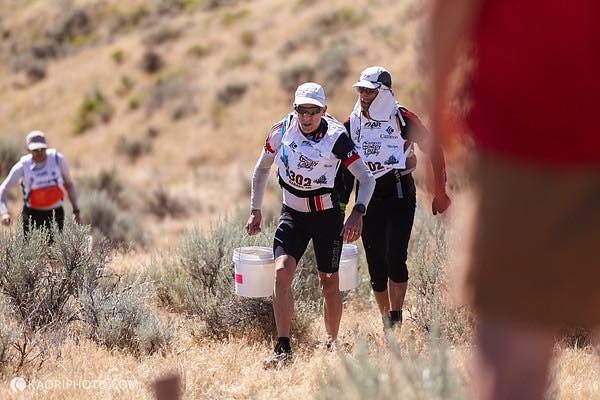
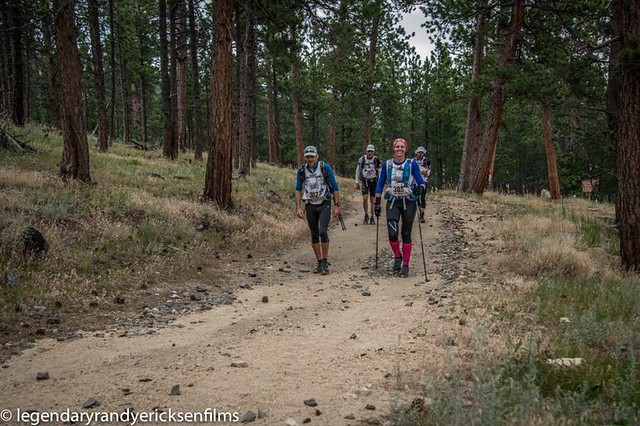
Leg 4 was our first step into the long, challenging middle
portion of the race course. This 62km hiking leg featured over 10,000ft of
climbing, with no checkpoints. While this leg was mainly on trails, one concern
was the lack of access to water on the trail and the possible need to come down
off the ridge early to gain access to water sources below. While we were not as
quick as we would have liked to be, we managed to maintain a steady pace and
manage our water supply enough to avoid having to come down early from the
ridge. The trek offered many stunning views as we trekked on into the first
night.


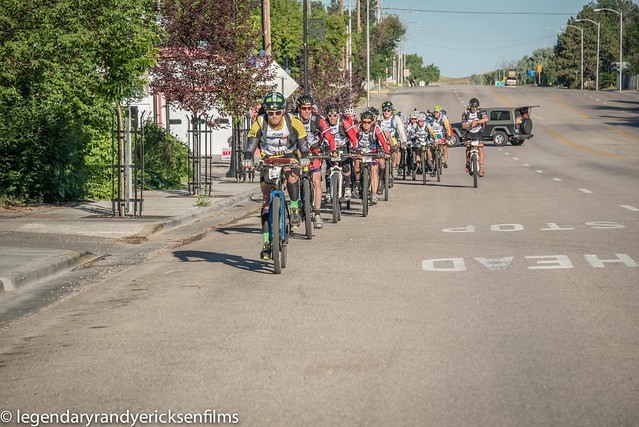
Leg 5 featured our first bike section – a 133km ride mainly
on roads. The challenge here was to move as quickly as possible on the good
road surfaces and keep a hard, steady pace moving forward. Early in this
section we tried to work with a few teams to move more quickly together, but
had to eventually slow our pace down to avoid burning anyone out.
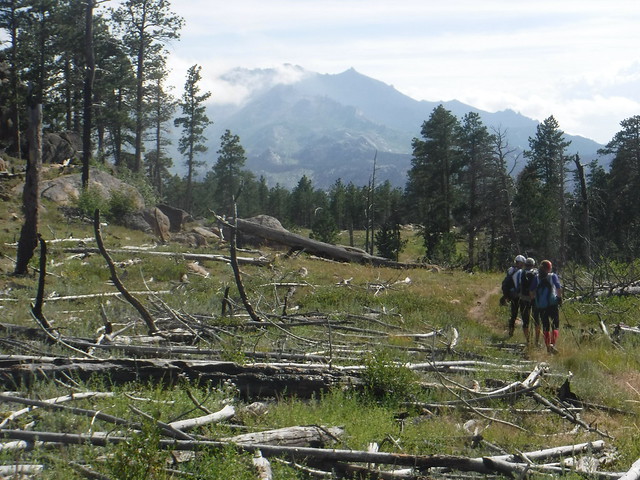
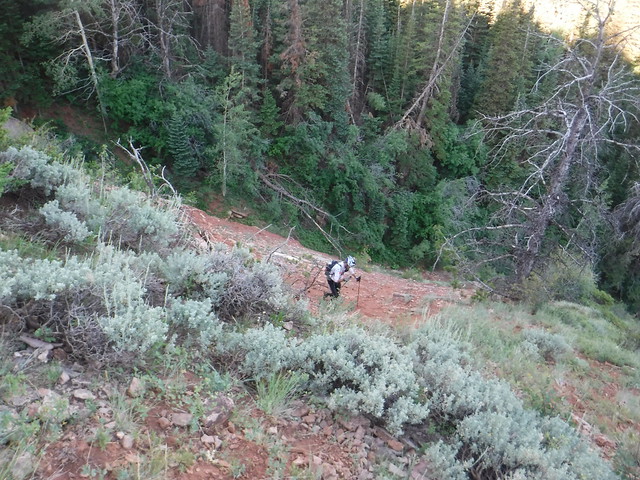
Leg 6 of the race was an even longer trek than the previous
one with about two thirds of the elevation. This trek generally followed the
continental divide – an imaginary line through the mountains that separates
East and West flowing rivers. For the most part there was an actual trail along
the continental divide, but at points it disappeared and made for some
challenging navigation. One of the most difficult off-trail navigation sections
was on this leg as well and consisted of a hilly area littered with fallen
trees, which made travel very slow and difficult. Most teams struggled here,
including us, losing about 5 hours looking for CP9.
At this point, it’s worth mentioning that our sleep strategy
was fairly poorly executed in this race. We opted to not sleep on the first
night and only sleep 45 minutes on the second night. The sleep details after
day 2 are pretty blurry to all of us, with many random stops for a short rest
and too much wandering along while mostly asleep. This is an area where we
certainly needed to be more proactive, as the lack of sleep really caught up to
us late in the race.
After completing the two major treks in the race, it was
time to turn our focus to the massive bike leg(s) ahead – a 58km ride followed
by a mind-boggling 264km more of biking, with a short trek and ropes/caving
section in between the two. Leg 7 had a bunch of gravel road and paved roads,
but ended with a spectacular cliff-edge trail that we rode in the middle of the
night, followed be an excellent single track section to get us down the
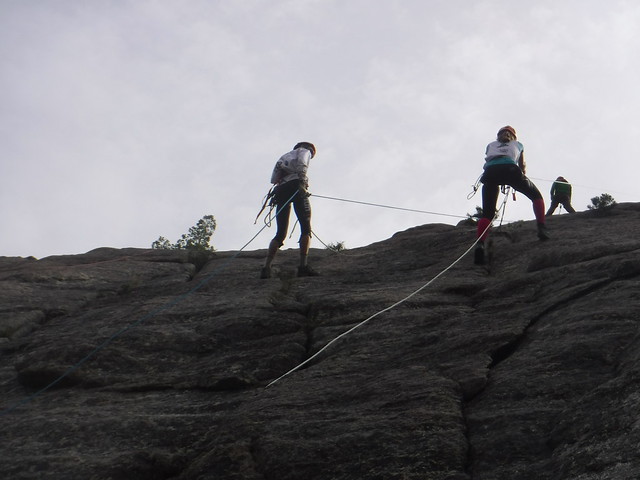
mountain. We quickly got transitioned and off to the caving section and then up
to the ropes. There was about an hour backup at the ropes so we were able to
get a little bit of rest here. After the rappel in the dark, we headed back to
the TA and opted for a little bit of sleep before heading off on the big bike
ride.

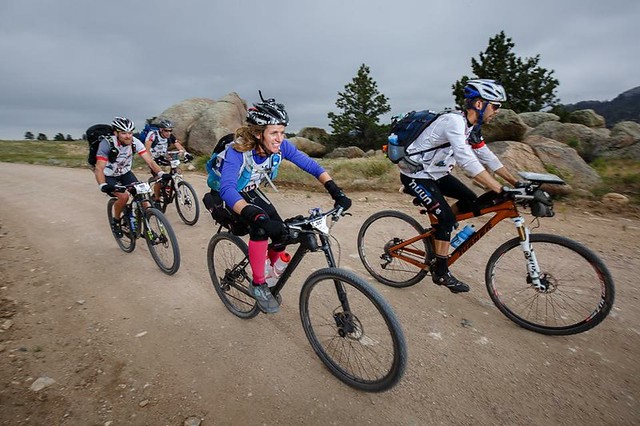
The 264km bike leg was all about covering terrain to get ourselves all
the way back to the Casper area and near the finish line. As we were progressing on the mammoth bike leg a pretty big storm was brewing just behind us which kept us motivated to move forward.


We did most of the
ride in the daytime and then had another quick sleep the following night before
heading into a sandy section of trail (“The Dunes”). We had heard a few teams
pass us while we slept so when we woke up, we pushed to catch back up to
them. We traveled with them for a while
until they appeared to head in a direction we weren’t sure we wanted to go to
get to the next checkpoint. We spend the next couple hours trying to figure out
where we were at on the confusing network of trails, only to discover that
earlier we had passed right by the checkpoint we were looking for. So we had to
backtrack quite a ways to find the CP. We then tried unsuccessfully a few times
to find a way out of the area that was less sandy, which cost us even more
time.
We finally got ourselves to the back-to-back packraft legs
of the race. The first of these (Leg 10) was a flat water paddle on a reservoir
after a 10km hike from the TA. This was a rather uneventful paddle, until we
set out to cross the dam to begin the whitewater portion of the paddling. Just
as we were crossing the dam, a storm blew in very quickly. We were lucky enough
to be able to use the buildings at the dam to shelter ourselves from the strong
winds and pounding rain. We waited out the storm for about 20 minutes and then
headed down to the bottom of the dam as soon as we felt it was safe. We put our
packrafts in the water and paddled another 15 minutes before a second, even
larger storm blew in. This time we didn’t have the luxury of any buildings
nearby to protect ourselves, so we pulled over to the shore and created a
lean-to shelter with our 2 rafts to protect ourselves from the storm. We all
huddled under our makeshift shelter while observing the massive thunder,
lightning, high winds, and heavy rain all around us. The tension was relieved
by the sound of Chad frequently trying to slurp up the rainwater that was leaking
overhead directly into the hood of his zipped up rain jacket and right past his
mouth.
Once the storm passed, we finally got back onto the river
and into the canyon portion of the rapids. This would be the most challenging
whitewater section of the race. We were greeted at the biggest rapid by a
rescue person (Brad – a fellow Canadian volunteering at the race) who informed
us of our options: River right was less of a drop but required a tight turn
mid-way through, while river left had a steep drop and water pushing up against
a rock wall at the bottom of the rapid. We all agreed that river right would be
the best/safest way to go. Chad and Nat took the lead and headed down the
rapid, just out of sight from where Ben and I waited. Once we got the signal from
Brad that they were through, I steered our packraft toward the rapid but could
not see the river right option that Brad had described… So down the steep left
side we went, luckily without incident.
The remainder of the rapids seemed much more tame and we thought we were
relatively home free for the whitewater section. However as Chad and Nat passed
through what seemed like an innocuous rapid, their boat was punctured and sank
very quickly. We could hear Nat screaming something (which we found out soon after
was that her paddle was floating away) as she and Chad tried to gather
themselves and their gear in the rapids. We got pulled into the flow as well
and as we approached, Chad warned us about a sharp rock in the rapid that had
popped their boat. I identified what looked like the sharp rock and proceeded
to work around it (and them) to head off to retrieve Nat’s paddle. I quickly
found out that the rock I identified was not the right one! So there we were, 4
people, 2 punctured boats, gear floating away everywhere, and everyone
scrambling to minimize the carnage. (Sidenote – we discovered later that this
sharp rock had been identified by the organizers in our race notes, but because
of the heavy rains from the storms just before we got there, this rock was now
underwater when we got there and appeared to just be another smooth boulder in
the rapid). We managed to get everyone to shore and gather our wits as we
figured out what to do. Just then we spotted a photographer just below the next
rapid on the shoreline and what appeared to be a reasonable climb out of the
canyon. So we each grabbed a handful of gear and swam the next rapid then
quickly got to the shore and worked our way up the steep canyon wall and out to
the road above. This took a considerable amount of time and during the climb
Chad slipped while trying to move some of the heavier gear up the canyon wall
and fell quite painfully on his hip and knee.
Once we got to the road, we were soon met by a medic and a
race referee (they must have been tracking us!). This was very fortunate for us
because with the race referee present, we were able to get minimal help from
the medic without breaking any rules about assistance, and the referee was able
to inform us of our options for moving forward in order to stay ranked in the
race. We were able to work out 2 possible options: borrow packrafts from a team
who had finished the paddling section but were still in the race, or take a
time penalty for taking roads instead of paddling a particular section that was
ahead (where the rules stated that we needed to stay in the riverbed). The
referee offered to help facilitate trying to get other packrafts for us, for
which we were very grateful. As such, we were able to trek (as planned) along
the road and a set of rafts were lent (thank you Journey Racing!!!!) and delivered
to us before the next paddling section. This allowed us to continue the race
(with a 4-hour penalty) and get to the finish line. We set off in our new boats
and paddled into the late night. Everyone was getting very sleepy and cold, so
when we got to another dam, we decided to sleep in a washroom at the campground
just below the dam. We all huddled in there and tried our best to keep warm and
get some rest. When we got up in the morning, we discovered that the lone dry
bag (mainly full of wet clothes) we had left outside while we slept was gone.
We looked everywhere for it but couldn’t find it. It was never recovered but we
figure it was either stolen by someone at the campground, or taken by an animal
who could smell the remnants of food on/in the bag.
The morning was cold an windy and we were struggling to stay
warm after a cold night and no dry clothes. Luckily the sun was shining bright
and helped to warm us up somewhat. Nat still struggled to get warm as we worked
our way through the remaining 20km of paddling. At one point she was getting
dangerously cold in her wet clothes. I was able to dry my clothes just from the
inside from the warmth I was creating while paddling, while Chad and Ben were just
barely keeping warm enough. But none of us had any extra clothes to offer Nat.
Since I was feeling warm enough at that point (and the day was beginning to
warm up), I had us pull over onto the shore and proceeded to swap upper body
clothes with Nat. I gave her my dry fleece and dry rain jacket and put on her
wet fleece. It was a bit of a tight fit for me in her little tiny fleece, but
we made it work and it got us to the end of the paddling section.
The final bike section was basically a very long climb to
the top of Casper Mountain. At this point I think we all felt that we would be
able to make it to the finish line even though it would be a struggle to do all
the remaining climbing. The views were incredible and we were very lucky to
have the clay roads dry enough for us to bike without all the clay sticking to
our tires (which was not the case for many teams ahead and behind us). The
final reward was a 10km paved road descent down Casper Mountain and into the
finish. But of course we had one last hurdle to clear before getting there – a
fitting conclusion to our race. We got to within about 500m of the finish line
when another massive storm hit, forcing us to take shelter for 15 minutes under
a bridge while we waited out the heavy rain and winds and took shelter from the
lightning. After sitting there frozen, waiting for the storm to pass, we
finally were able to get ourselves to the finish line – cold, wet, but happy
that we were able to overcome all of the hurdles we faced as a team

Looking back at all of the challenges we faced coming into
the race, as well as the unforeseen mishaps we faced during the race, I would
say that we managed pretty well. Ben faced a major challenge in racing more
than 3 times longer than he’d ever raced before. While he certainly struggled
at times, he also persevered and kept a positive attitude, accepted help from
his team mates, and every time he felt strong was ready to help out where he
could, including helping Chad with the navigation. Chad did a great job of
leading the navigation in his first ARWC. At times he felt like he was making
too many mistakes, but looking back at our track, it’s clear that many other
teams (including top teams) struggled in many of the same places. Nat pushed
her limits by putting herself at the front of the paceline whenever she was
feeling strong, and even doing some towing during the race. I went into the
race unsure if my knee injury would slow me down. I had a few scares during the
race, but overall I felt like my body (and mind) adequately met the challenges
as they surfaced. And overall, considering that Nat and I had only ever raced
against Chad and none of us had ever even met Ben before the race, I would say
that we all worked well together and managed to have a good time as well. It
appears we finished 23rd after incurring the 4 hour penalty, which
we feel is a quite respectable placing. It was a pleasure to see Cowboy Tough
host the AR World Championships and they pulled it off flawlessly. And as
always, it was great to see so many familiar faces and a bunch of new ones as
well at the race. Now on to making plans for 2018!